Never forget: the web is made of people!

The web is much more than a set of technologies; it is fundamentally a human network. Like the Web 2.0 maxim goes: the web is made of people. And that’s just as true in the AI era.

From ReadWriteWeb to the Agentic Web
 Richard MacManus
The web is much more than a set of technologies; it is fundamentally a human network. Like the Web 2.0 maxim goes: the web is made of people. And that’s just as true in the AI era.

As interfaces move inside agents, apps, brands and content systems are being broken into machine-readable components.

The agentic web is starting to look less like a theory and more like infrastructure — with commerce, governed actions and identity layers beginning to form.

Businesses adopting agentic AI need more than novelty chatbots. Drawing on RunSignup’s rollout, I look at two practical lessons: embed AI where users already work, and move fast but safely.
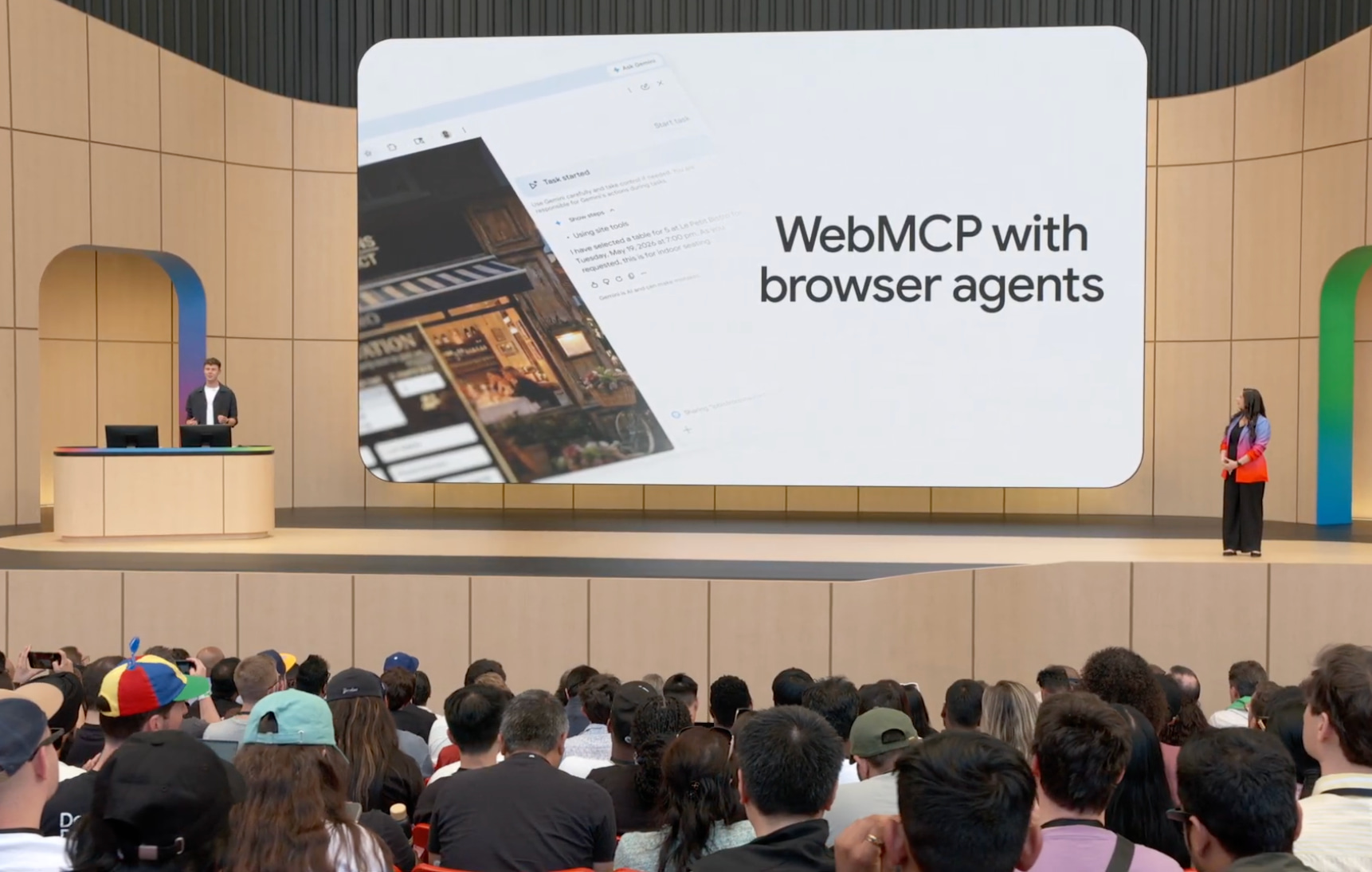
Google used the term ‘agentic web’ a few times during its developer keynote at Google I/O this week, and other companies like Adobe and Automattic are also rallying behind it.
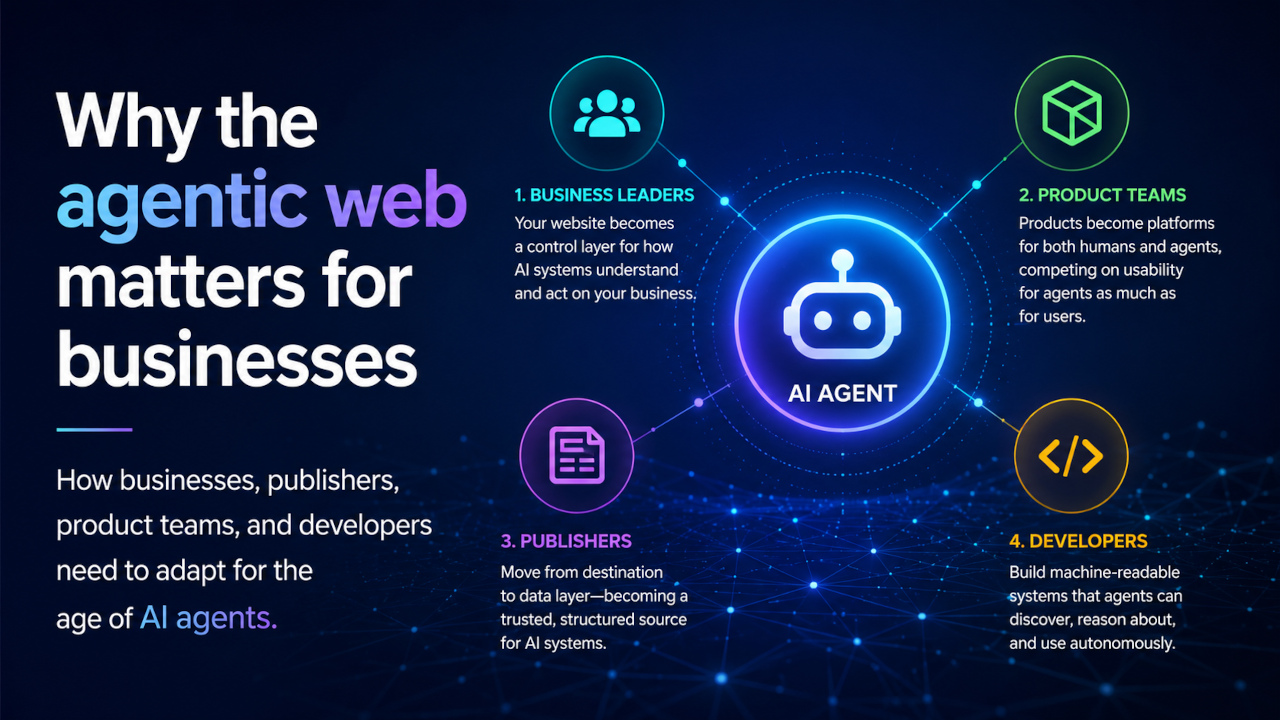
As AI agents begin to discover, interpret, and act on websites on behalf of users, businesses need to rethink how their digital presence works. The agentic web changes what websites are for — and what product teams, business leaders, publishers, and developers need to prioritize.

The web has evolved from read, to read/write, to platform-mediated — and now to agentic. In this post, I define the agentic web, explain how AI agents are becoming a new class of user, and show why websites still matter in an era where AI systems increasingly discover, interpret, and act on our behalf.

AX was the new DX. Now it’s becoming the new UX. As AI agents become users of websites, apps, and platforms, the question is no longer just whether they can discover your content — but whether they can understand and use what you’ve built.

Introducing the four core patterns of the early Agentic Web — a guide to getting started on implementing AI functionality into your website. Just as Web 2.0 had a set of key design patterns to help smooth the way for organizations, a set of patterns is emerging for the agentic web too.
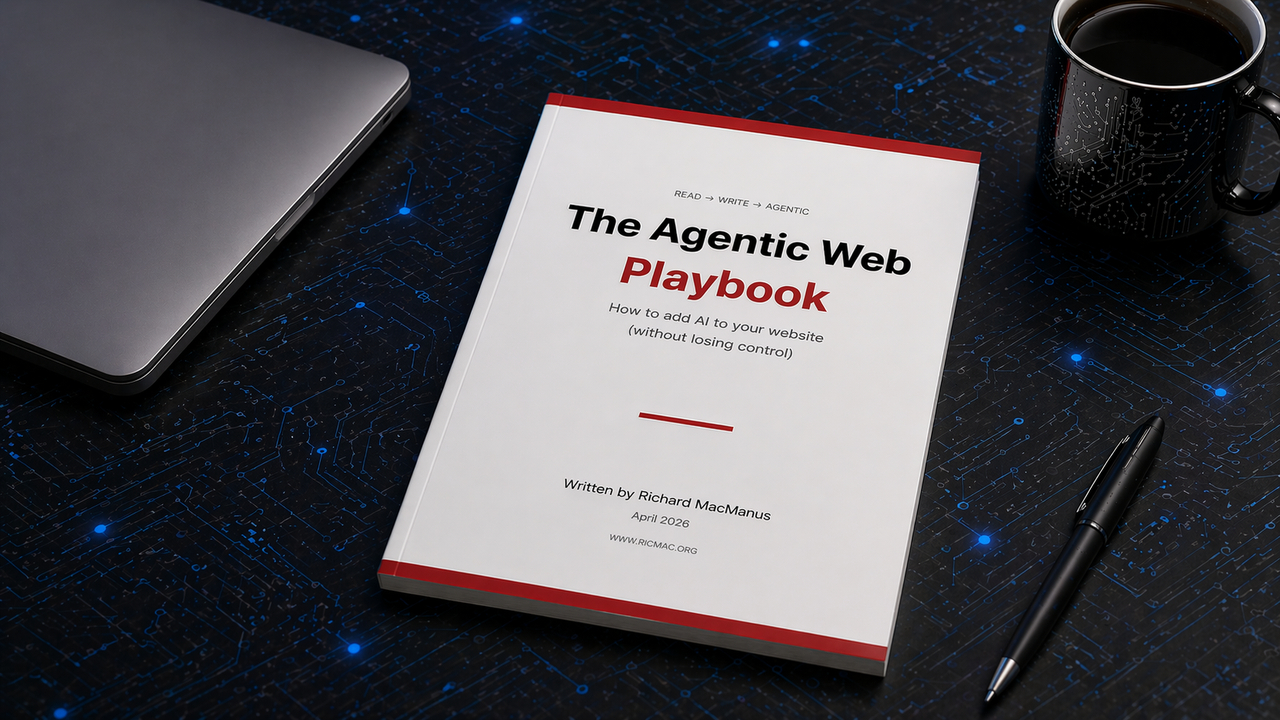
AI is changing how people use websites — shifting from navigation to delegation. Instead of browsing pages, users increasingly rely on AI systems to answer questions, summarize content, and retrieve information. This post explores what that means in practice, and introduces a playbook for adapting.

The web is shifting from pages to actions. As AI agents increasingly act on behalf of users, websites are evolving from content destinations into systems that expose capabilities — things machines can discover, combine and execute.

I built an “article assistant” that can answer questions about a page using local AI in the browser — with a cloud fallback when needed. This post is a conceptual walkthrough of how it works, from on-device inference with Gemini Nano to a simple capability-based routing layer.

Websites may soon expose capabilities directly to AI agents. In this post I experiment with WebMCP on my personal site, implementing two browser-side tools that allow an AI assistant to search an article and subscribe a user to my newsletter.
I built an AI chatbot for my personal website called Ask Ricmac. In this post I explain how it works and how I used Cloudflare Workers, Vectorize, D1, Workers AI and MCP to build it.

As AI agents begin interacting directly with websites and services, a new “agentic web stack” is emerging. In this article, I map the technologies shaping this next phase of the web.