

The agentic web is an emerging phase of the internet where AI agents increasingly discover, interpret, and act on websites and digital products on behalf of users.
The key shift is this: websites are no longer only destinations for people. They are also becoming sources of data, context, and capabilities for AI systems.
I’ve been chronicling the evolution of the web for more than two decades, from the dot-com era through Web 2.0, social platforms, mobile apps, and now AI. I see the agentic web not as a sudden break from web history, but as the next major shift in how the internet is used.
Any attempt to divide the web into eras is imperfect, but I’d argue there have been four major phases so far:
- Read web / dot-com era: from the birth of the web in 1990 through to around 2003, when websites were primarily places to publish and consume information.
- Read/write web / Web 2.0: from 2004 till about 2012, when blogs, social software, APIs, and user-generated content expanded participation.
- Platform web: from around 2013 to 2021, when large platforms increasingly mediated discovery, distribution, and monetization.
- Agentic web / AI era: from the debut of ChatGPT in late 2022 to the present, as AI systems increasingly mediate how people discover and use the web.
If I had to simplify even further, I’d explain the big shifts in the web like this:
READ -> READ/WRITE -> READ/WRITE/AGENTIC
The read era was when a website was regarded as a collection of pages for people to visit.
The read/write era, or Web 2.0, was when ordinary users could publish, share, remix, and participate at web scale — first through blogs, wikis, social software, and APIs, then through smartphones and social media.
The platform colonization era was really an extension of the read/write era, but unfortunately the web got worse (“enshittification” is the word often used to describe this period).
And now we’re entering the agentic web, when it’s not just people using the web — it’s also AI agents acting on our behalf.
A quick history of the agentic web
The word “agentic” comes from “agency”: the ability to take action or choose what action to take. In AI, the term now refers to systems that can pursue goals, use tools, interact with software, and complete tasks with some degree of autonomy.
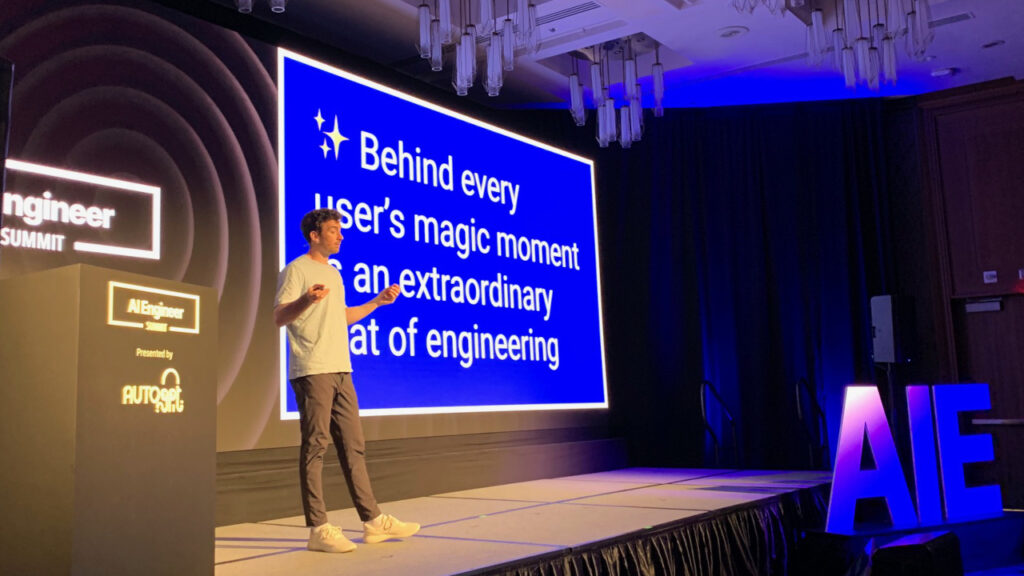
The power of AI agents has come on incredibly quickly. In 2023, I attended the first AI Engineer conference in San Francisco and wrote at the time that the hype around agents seemed overblown. Even Shawn “swyx” Wang, the conference organizer, told me that agents hadn’t yet proven they could consistently perform basic tasks.
But how quickly things changed. In late 2024, Anthropic introduced the Model Context Protocol, which gave AI systems a standard way to connect with external tools and data sources. In 2025, Microsoft began talking about an “open agentic web,” and the W3C established an AI Agent Protocol Community Group to explore technical foundations for this emerging web.
By the end of 2025, the agentic web had moved from a speculative phrase to a serious topic for platforms, standards bodies, researchers, and product teams.
What does the agentic web mean for websites?
Importantly, this new era doesn’t mean that websites will disappear — although it is true that their business models are under threat from AI products like Google’s “AI Mode” and ChatGPT. But websites, as an artifact of the World Wide Web, will remain the primary way people and organizations share information on the internet.
The agentic web means a shift from pages to capabilities.
What is changing, however, is the way people reach and use websites. Fundamentally, the agentic web means a shift from the page model to a model based on capabilities.
That’s a huge change, because for most of its history the web has been built around documents. Users browse pages, click links, and navigate interfaces designed for humans. Even as the web became more interactive in Web 2.0 — through blogs, social media, and web apps — the underlying model remained the same: people directly interacting with websites.
In the agentic web, that model is no longer sufficient.
AI systems are increasingly acting on behalf of users — retrieving information, summarizing content, and completing tasks. Instead of navigating a site step by step, a user can delegate intent: summarize this article, find the key points, book this, compare those.
The conceptual changes to websites
There are three key changes happening to websites, summarized in this table:
| Read/Write Web | Agentic Web |
| Website as destination | Website as data/context layer |
| Interface for humans | Capability surface for humans and agents |
| Navigation by users | Delegation to AI agents |
By “capabilities,” I mean the things a site makes possible for a user or agent: search, retrieve, compare, summarize, subscribe, book, buy, query, configure, or act. In the traditional web, those capabilities were wrapped inside human-facing interfaces. In the agentic web, they increasingly need to be exposed in ways that AI systems can understand and use.
Perhaps the most jarring change is the shift from website as destination to website as a data and context layer.
You might remember that the dominant metaphor for websites in the dot-com era was that they were places for people to visit. The canonical example is Amazon.com, which initially billed itself as a virtual bookstore. It’s also why personal websites were called “home pages” back then.
This conception of a website as a destination hasn’t entirely gone away — and I hope it never does, because I always want the web to be centered on people sharing what they know. But in the agentic era, how people access web knowledge is changing. AI systems will increasingly focus on the underlying content, structure, metadata, and capabilities a site exposes.
Why websites still matter
I know it’s a scary time for web professionals, with massive job losses in our industry and a lot of hype around agentic AI. But websites still matter — and in fact, their role is expanding.
Websites will continue to be where people publish ideas, explain products, build trust, establish identity, and create canonical sources of truth. To be effective in this new era, though, they will also need to work with AI systems that act on behalf of users.
Websites are surfaces that AI systems can discover, interpret, and act upon.
In the read web, websites were pages to consume. In the read/write web, more people could participate. In the platform web, sites were increasingly mediated by large distribution systems. Now, in the agentic web, they are becoming surfaces that AI systems can discover, interpret, and act upon.
That means AI agents are becoming a new class of user for websites and digital products. They do not browse like humans. They extract, compare, summarize, cite, and increasingly act.
Adapting to the agentic web
If you’re thinking about how to adapt to this shift, I offer an Agent Readiness Assessment that shows how well your website and related product surfaces work from an agent’s point of view — and what to improve first.
In future posts, I’ll look more practically at what this means for site structure, metadata, content design, APIs, agent protocols, and AI-facing product experiences. Subscribe by email or RSS, or follow me on LinkedIn, to get notified.
Feature image created with ChatGPT, via prompting.